

Accurate wound care documentation plays a crucial role in healthcare. Whether a patient presents with injuries, chronic ulcers, surgical wounds, or requires routine dressing changes, proper clinical notes and ICD-10 coding ensure correct treatment, fewer denials, and clean claims.
Incorrect wound care coding can lead to claim rejections, compliance risks, revenue loss, and even audits. That is why understanding the ICD-10 code for wound care unspecified, along with all related wound-care diagnosis codes, is essential for every provider and medical billing team.
This comprehensive guide breaks down how to use the correct ICD-10 codes, when unspecified codes are appropriate, and how to prevent documentation errors, helping your practice maintain compliance and secure maximum reimbursement.
What Is the ICD-10 Code for Wound Care Unspecified?
The ICD-10 code for wound care unspecified is used when a provider documents that wound care is needed, but the clinical notes do not identify the type, cause, or exact location of the wound. This code acts as a general placeholder when no specific diagnosis code can be assigned due to insufficient documentation.
This code is typically used when:
- It is the first patient encounter, and the wound is still being assessed
- The patient’s history is not fully available
- The wound type has not yet been identified
- Documentation lacks the necessary detail to assign a specific ICD-10 code
- The location or severity of the wound is unclear
Although this code is helpful, it should be used sparingly and only when necessary. Overuse of unspecified codes can lead to payment issues, denial trends, and increased audit risk.
Healthcare organizations should always aim for the most specific ICD-10 code supported by documentation.
Understanding Different ICD-10 Codes for Wound Care
Accurate wound documentation includes wound type, depth, severity, cause, location, and presence of infection. These details guide the coder in selecting the appropriate ICD-10 code.
Below are the major wound-care ICD-10 categories every provider should know.
ICD-10 Code for Surgical Wound Care
Surgical wounds have their own set of ICD-10 codes. These include the T81 category, which covers:
- Post-procedural infections
- Delayed wound healing
- Surgical wound dehiscence
- Non-healing surgical wounds
When wounds occur as a complication following surgery, the claim must clearly reflect:
- The procedure performed
- The presence of any complication
- The wound type (e.g., infected, dehisced, delayed healing)
Using the correct ICD 10 code for surgical wound care helps ensure accurate reimbursement and compliance with payer guidelines.
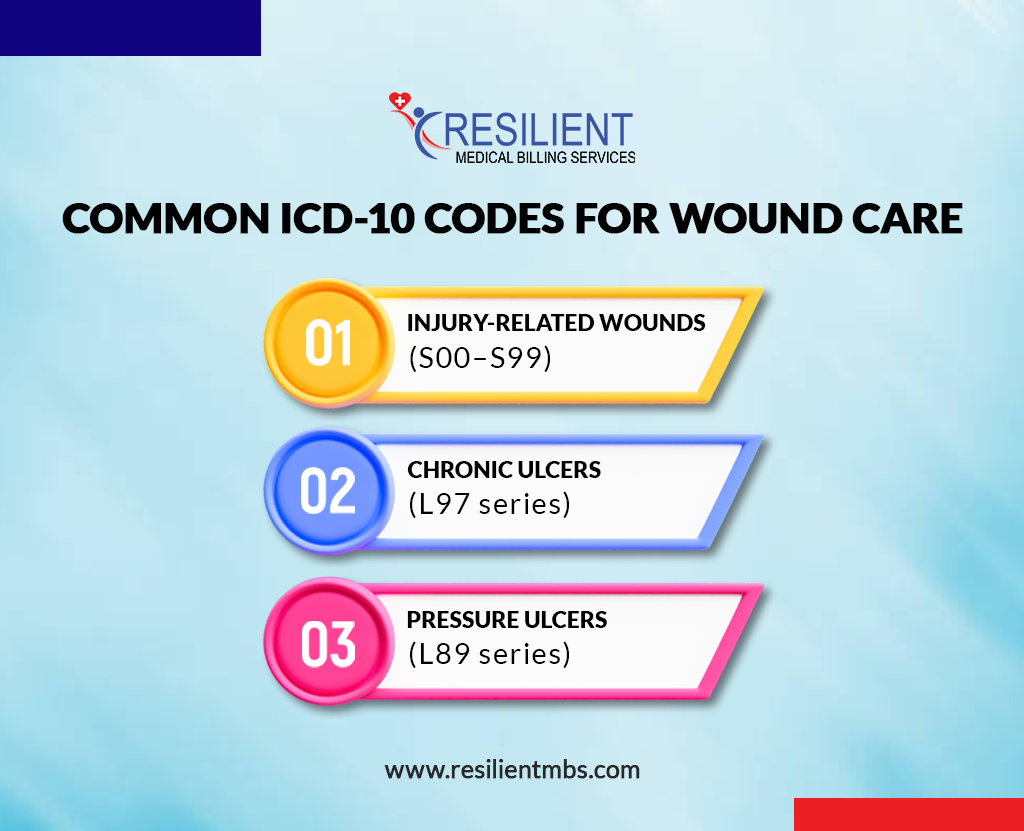
Common ICD-10 Codes for Wound Care
Wound care covers multiple categories depending on cause, type, and severity. Some commonly used ICD 10 codes for wound care include:
1. Injury-Related Wounds (S00–S99)
These include cuts, open wounds, lacerations, and injuries to specific body parts.
2. Chronic Ulcers (L97 series)
Used for chronic lower-extremity ulcers not caused by pressure.
3. Pressure Ulcers (L89 series)
Coded based on:
- Anatomical location
- Ulcer stage (1–4)
- Whether the ulcer is healed, unstageable, or unspecified
Using incorrect ulcer stages or missing documentation often leads to claim denials, a common audit trigger.
Wound Dressing ICD-10 Codes
When the primary purpose of the visit is wound dressing changes, aftercare, or monitoring surgical dressings, coders should use wound dressing ICD-10 codes such as:
- Z48.0 – Encounter for change or removal of surgical wound dressing
- Z48.01 – Encounter for change of surgical wound dressing
These codes indicate aftercare rather than active wound treatment.
Using these correctly helps differentiate whether the encounter involved wound evaluation or routine dressing maintenance.
Need Clarity on Unspecified Wound Care Coding?
Using the ICD 10 Code for Wound Care Unspecified can be appropriate in certain cases, but only when the documentation clearly supports it. If your team is unsure about code selection, documentation gaps, or claim accuracy, Resilient MBS can help you strengthen your process, reduce avoidable denials, and improve billing confidence.
When to Use “Unspecified” Codes
The icd 10 code for wound care unspecified, should be used only when documentation does not support a more specific code.
Use unspecified codes only when:
- The type of wound is unknown
- The location is not documented
- The cause is not identified
- The record lacks essential wound details
Overuse of unspecified codes increases denial rates and signals poor documentation practices, something payers monitor closely.
ICD-10 Wound Care Coding Guidelines
Proper wound care coding ensures clean claims and helps physicians deliver better care. The following guidelines support accurate ICD wound care documentation and coding practices.
1. Identify the Type and Severity of the Wound
Coders must distinguish whether the wound is:
- Acute or chronic
- Infection present or absent
- Superficial, deep, or full-thickness
- Caused by pressure, trauma, surgery, or disease
Each detail influences code selection.
2. Link Diagnosis Codes to Procedures Correctly
Every wound-care CPT or HCPCS code must align with its corresponding ICD-10 code.
For example:
- Wound debridement must link to the correct ulcer or trauma wound code
- Dressing changes must match aftercare codes
- Negative-pressure wound therapy must pair with the correct wound diagnosis
Diagnosis–procedure mismatch is one of the leading causes of wound-care claim denials.
3. Ensure Excellent Documentation
Accurate documentation supports accurate coding. Providers must record:
- Wound location and size
- Depth and stage (if applicable)
- Presence of necrosis, infection, slough
- Drainage characteristics
- Treatment provided
- Response to treatment
This level of detail prevents unspecified code usage and improves overall claim success.
Resilient MBS helps healthcare providers eliminate coding errors, reduce denials, and improve reimbursement accuracy.
Common Documentation and Coding Mistakes, and How to Avoid Them
1. Overusing Unspecified Codes
Payers expect the most specific ICD-10 code available. Excessive use of unspecified codes can trigger audits or result in reduced payment.
2. Missing Critical Wound Information
If wound type, stage, or location is not documented, the coder cannot select the correct code.
3. Diagnosis and Procedure Not Matching
If the treatment performed does not align with the diagnosis code billed, claims are often denied.
How to Prevent These Errors:
Document all wound characteristics clearly
Use the most specific ICD-10 code possible
Ensure diagnosis supports the procedure
Train providers on wound documentation best practices
Benefits of Accurate Wound Care Coding
1. Faster and Correct Reimbursement
Precise ICD-10 coding reduces denials and ensures your practice is paid correctly and on time.
2. Clean Documentation That Supports Patient Care
Accurate coding reflects the patient’s true clinical condition and helps track wound-healing progress.
3. Strong Compliance and Reduced Audit Risk
Correct ICD-10 usage demonstrates regulatory compliance and protects your organization from billing audits.
Final Words
Understanding the icd 10 code for wound care unspecified and when to apply more specific wound-care codes is essential for successful billing, documentation accuracy, and compliance. Providers should always document wound characteristics thoroughly and choose the most precise code supported by the record.
If your practice struggles with coding errors, denials, or inaccurate documentation, partnering with experts can help streamline the process, reduce revenue leakage, and maintain compliance.
Strengthen Your Wound Care Billing Process
Accurate wound care billing starts with clear documentation and the right coding decisions. When both align, providers are in a much better position to avoid delays, support compliance, and protect reimbursement. Resilient MBS works with healthcare practices to simplify wound care coding and billing so teams can focus more on patient care and less on preventable billing issues.
FAQs
What does the ICD-10 code for wound care unspecified mean?
It is used when a patient requires wound care, but the clinical documentation does not clearly identify the wound type, cause, or location.
When should I avoid using an unspecified wound care code?
Avoid it when wound characteristics such as type, location, or cause are available in the notes.
Is there a separate ICD-10 code for surgical wound care?
Yes. Surgical wounds have dedicated codes, especially for complications such as infection or non-healing wounds.
Are there ICD-10 codes for wound dressing changes?
Yes. Codes such as Z48.0 and Z48.01 indicate encounters for changing or removing surgical wound dressings.
Why is documentation important for wound care coding?
Clear documentation supports ICD-10 code selection, reduces claim denials, and ensures accurate reimbursement.