

The dental billing landscape is evolving quickly in 2026, with new CDT updates, stricter insurance requirements, and stronger payer scrutiny for medical necessity. Accurate dental billing codes are now essential for reducing claim delays, preventing denials, and improving reimbursement across dental and orthodontic practices.
This guide explains the latest billing codes used across dentistry, from routine care and restorative work to orthodontic services. You’ll also learn how ICD-10 dental diagnosis codes support medical necessity, how orthodontic billing works, and how to avoid coding mistakes that cost practices revenue.
Understanding Dental Billing Codes
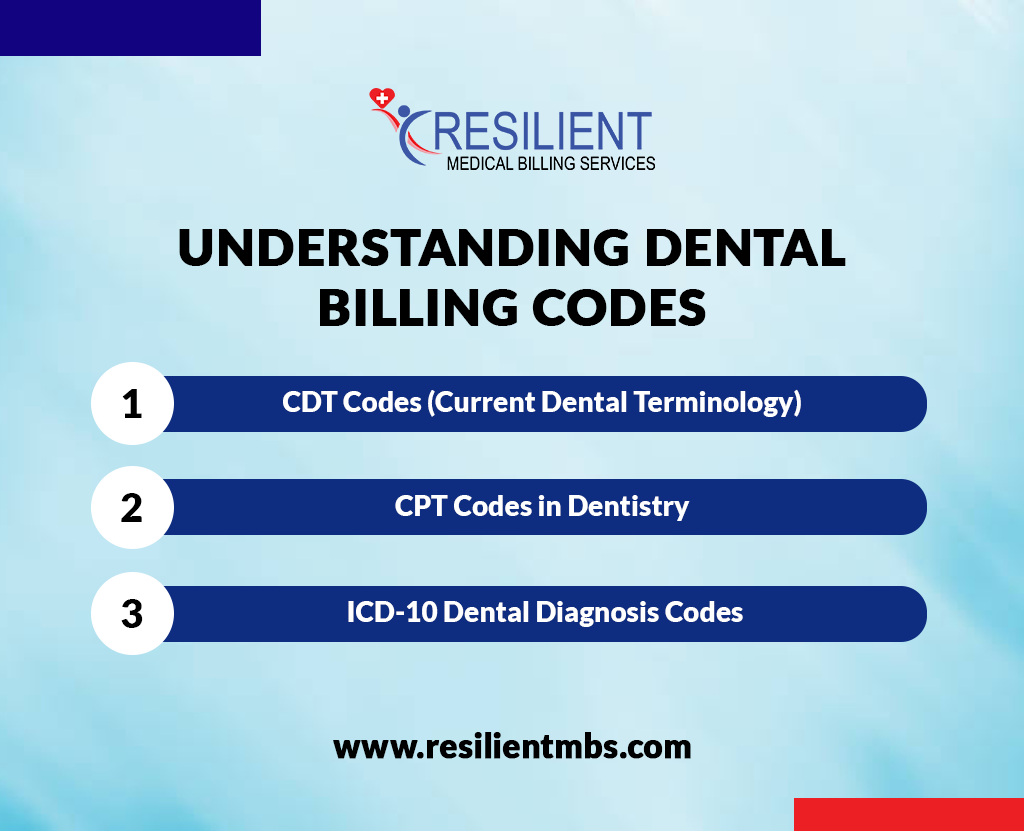
Dental offices rely on three major code sets to submit clean, compliant claims:
1. CDT Codes (Current Dental Terminology)
CDT codes describe dental procedures such as exams, cleanings, fillings, crowns, extractions, dentures, and braces. Every dental claim requires CDT codes for accurate reporting and standardized billing.
Common examples:
- D0120 – Periodic oral evaluation
- D1110 – Adult prophylaxis (cleaning)
- D2740 – Porcelain/ceramic crown
- D2330–D2335 – Composite fillings
- D4341 – Scaling and root planing
These codes form the backbone of everyday dental billing.
2. CPT Codes in Dentistry
CPT codes are used when a dental treatment is considered medically necessary or overlaps with medicine, for example, oral surgery, biopsies, sedation, or anesthesia.
Medical crossover claims rely on CPT codes plus ICD-10 dental codes to justify treatment necessity.
3. ICD-10 Dental Diagnosis Codes
ICD-10 codes explain why a procedure was performed. They identify the diagnosis, support medical necessity, and help insurers validate coverage. These codes are critical for both dental and medical claims.
Common ICD-10 dental codes:
- K02 – Dental caries
- K04 – Diseases of pulp/root
- K05 – Gingival disease
- K08.1–K08.4 – Tooth loss and abnormalities
- S02.5XX – Dental fractures
Updating ICD-10 codes yearly ensures compliance and accurate reimbursement.
Key Dental Billing Codes You Need in 2026
General Dentistry: Most Common CDT Codes
Practices frequently use the following:
- Exams: D0120, D0140, D0150
- Cleanings: D1110 (adult), D1120 (child)
- Fillings: D2140–D2394
- Crowns: D2740, D2750, D2790
- Periodontal Care: D4341, D4342, D4910
- Radiographs: D0210, D0220, D0274
These codes support routine care and foundational dental services.
Dental Billing Trends in 2026
The industry is shifting toward:
- Increased use of ICD-10 dental codes to justify medical necessity
- More orthodontic billing through digital systems
- Updated orthodontic billing codes for braces and aligners
- Strict payer audits for treatment documentation
- AI-supported coding tools that flag errors before claim submission
Staying updated helps practices prevent delays and maintain clean-claim rates.
ICD-10 Dental Codes: Why They Matter
ICD-10 dental diagnosis codes explain the clinical reason behind every CDT code. In 2026, insurers require stronger justification, especially for:
- Trauma-related dental injuries
- Infections
- Congenital defects
- Orthodontic treatment tied to functional or medical need
Accurate ICD-10 pairing ensures coverage, approval, and reimbursement.
Orthodontic Billing and Dental Codes for Braces
Orthodontic billing comes with stricter documentation and phase-based treatment reporting. The dental code for braces includes CDT codes that describe evaluation, appliance placement, adjustments, and retention.
Common Orthodontic Codes
- D8660 – Initial orthodontic exam
- D8080 – Comprehensive orthodontic treatment (adolescents)
- D8090 – Comprehensive orthodontic treatment (adults)
- D8220 – Fixed appliance therapy
- D8670 – Periodic orthodontic visits
- D8680 – Orthodontic retainers
Accurate code sequencing supports proper payment across lengthy treatment plans.
Orthodontic Billing Guide for 2026
Orthodontic claims typically require:
- Diagnostic records (X-rays, photos, models)
- Growth and skeletal analysis
- Treatment plans with timelines
- Medical necessity documentation (for medical crossover)
- Progress notes for continuing care
Insurance carriers expect detailed, clear justification before approving or reimbursing claims.
Common Billing Errors to Avoid
- Using full-comprehensive codes for limited cases
- Billing adjustments without supporting notes
- Missing documentation of skeletal abnormalities
- No prior authorization when required
- Using outdated CDT or ICD-10 codes
Avoiding these mistakes prevents unnecessary denials and delays.
Medical Billing for Orthodontics (When It Applies)
While braces typically fall under dental insurance, medical insurance may cover treatment when there’s a functional or health-related reason, such as:
- Jaw fractures or injuries
- Severe malocclusion affecting speech or chewing
- Congenital anomalies (e.g., cleft palate)
- Severe airway restrictions or sleep apnea
- TMJ dysfunction
- Craniofacial deformities
A successful claim requires both orthodontic procedure codes and accurate ICD-10 dental diagnosis codes aligned with medical necessity.
ICD-10 Dental Diagnosis Codes vs. Orthodontic Codes
To prevent denials, claims must match:
- ICD-10 codes → Diagnosis (the patient’s condition)
- Orthodontic codes → Procedure performed
When both align clearly, insurers approve claims faster and with fewer audits.
Tips for Accurate Dental Billing in 2026
To keep reimbursement strong and predictable:
- Use the latest CDT, CPT, and ICD-10 dental codes
- Ensure detailed documentation, from exams to progress notes
- Record all medical necessity explanations clearly
- Automate eligibility checks to verify patient coverage
- Use integrated EHR + practice management software
- Conduct routine internal audits
- Train staff regularly on updated billing rules
- Implement AI coding assistants to reduce manual errors
Proper coding protects revenue, prevents denials, and strengthens overall cash flow.
Struggling With Dental or Orthodontic Billing? Here’s How Resilient MBS Helps
Managing dental billing codes, orthodontic billing, CDT updates, and ICD-10 documentation is time-consuming, and mistakes can directly impact cash flow. Resilient MBS helps practices eliminate coding errors, increase clean claims, and maintain strong collection rates across general dentistry and orthodontics.
Why Dental Practices Choose Resilient MBS
- Certified dental billers specializing in CDT, CPT, and ICD-10 dental codes
- Expert orthodontic billing support, including braces, aligners, and medical crossover claims
- Denial management that recovers lost revenue
- Payer compliance monitoring for 2026 requirements
- Transparent reporting and real-time claim tracking
- Reduced administrative burden so teams can focus on patient care
Resilient MBS ensures accurate code selection, faster payments, and fewer denials, allowing your practice to run smoothly and profitably.
Conclusion
Dental billing in 2026 requires precision, up-to-date coding knowledge, and thorough documentation. Using the correct dental billing codes, orthodontic codes, and ICD-10 dental diagnosis codes helps practices stay compliant, avoid delays, and ensure steady reimbursement.
With expert support from Resilient MBS, dental and orthodontic practices can simplify billing, reduce denials, and build a healthier revenue cycle.
FAQs
Why are dental billing codes important in 2026?
They help insurers understand treatments clearly, prevent claim denials, and ensure faster payments as payer rules become stricter.
What are ICD-10 dental diagnosis codes used for?
They describe the patient’s condition and support medical necessity for dental or orthodontic procedures.
What is the dental code for braces?
Braces are billed under CDT orthodontic codes (D8000–D8999), including exams, diagnostic records, appliance placement, and adjustments.
Can orthodontic treatment be billed to medical insurance?
Yes, when treatment is medically necessary due to injury, airway issues, congenital defects, or functional problems.
What are common orthodontic billing codes?
D8660 (initial exam), D8080/D8090 (full treatment), D8680 (retainers), D8670 (periodic visits), and related diagnostic codes.