
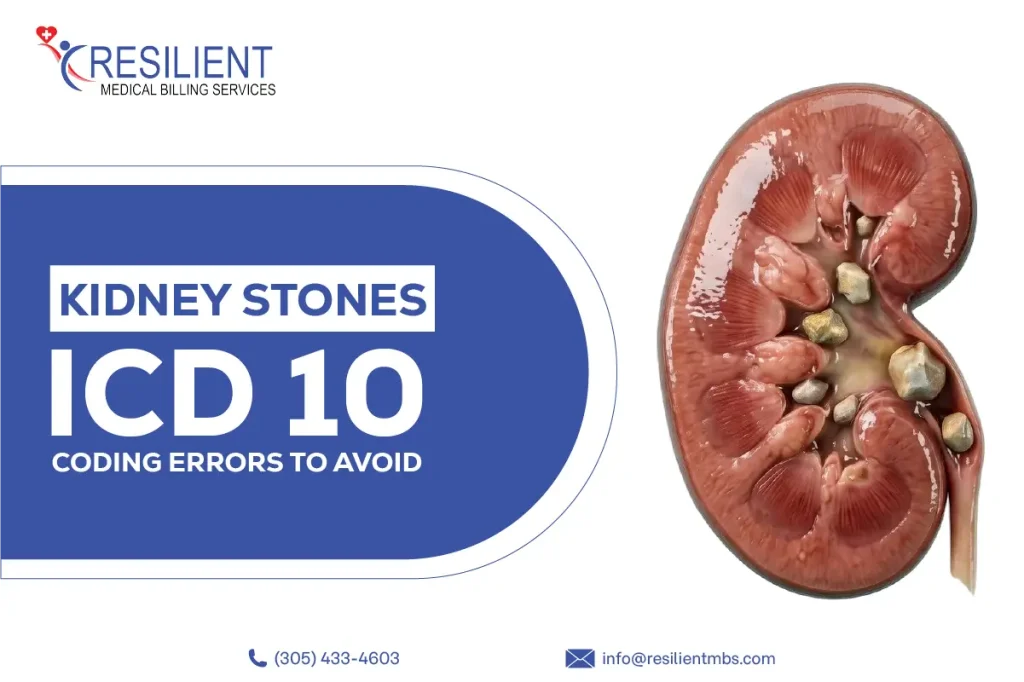
Kidney Stones ICD 10: Codes, Examples & Billing Tips
The primary ICD 10 code for kidney stones is N20. 0, calculus of kidney. Use N20. You train on data till oct 2023 then for ureteric stone N20. 2 when both locations contain stones, respectively. N13 may be needed for hydronephrosis with calculous obstruction. 2. Select his/her choice from the documented diagnosis, location of stone, associated conditions, and relevant coding guidelines.
This guide is specific to U.S. ICD-10-CM, the clinical modification overseen by CDC’s National Center for Health Statistics. The diagnosis code is what reports the condition of interest, not how much treatment will cost or whether a payer will cover it. N20. As for bills that are read by patients. 0 also does not divulge the dimension, lateralization or plan of treatment for the stone.
Kidney Stones ICD 10 Code Table
Begin with the documented site, then check combination codes and instructional notes. Note these codes do not come together on one claim; they are alternative or conditional additions.
| Code | Description | When to use it |
|---|---|---|
| N20.0 | Calculus of kidney | An active renal stone, including nephrolithiasis or staghorn calculus, when no overriding instruction applies. |
| N20.1 | Calculus of ureter | A ureteral stone, including a stone at the ureteropelvic junction, subject to complication rules. |
| N20.2 | Calculus of kidney with calculus of ureter | Stones documented in both the kidney and ureter, when this combination appropriately describes the condition. |
| N20.9 | Urinary calculus, unspecified | A urinary stone is diagnosed, but the record does not establish its location. |
| N21.0 | Calculus in bladder | A stone located in the urinary bladder. |
| N21.1 | Calculus in urethra | A stone in the urethra, the passage carrying urine outside the body. |
| N21.8 | Other lower urinary tract calculus | Another specified lower urinary tract location that indexes to this code. |
| N21.9 | Calculus of lower urinary tract, unspecified | The lower urinary tract is identified, but the precise site is unspecified. |
| N22 | Calculus of urinary tract in diseases classified elsewhere | A calculus classified as a manifestation of another disease; code the underlying disease first. |
| N13.2 | Hydronephrosis with renal and ureteral calculous obstruction | Hydronephrosis associated with stone obstruction, following the Index and Tabular instructions. |
| N13.6 | Pyonephrosis | Infected obstructive uropathy, including the qualifying stone, hydronephrosis, and infection combination. |
| N23 | Unspecified renal colic | Renal colic is the established diagnosis without a definitive underlying diagnosis that supersedes it. |
N20 and N21 are parent categories. Select the appropriate complete code beneath them. N22 and N23 are complete codes despite having fewer characters.
Stone Location Determines the Starting Point
Kidney, ureter, and urethra are different sites
The ICD-10 code for renal calculus is usually the code N20. 0. Nephrolithiasis means stones in the kidney; urolithiasis is broader and can mean the stones in any part of urinary tract.
A ureter transports urine from the kidney to bladder It moves urine from the bladder through the urethra and out of the body. This is how confusing terms can change an N20. Incorrect N21 from 1diagnosis 1 claim.
Ureteral Stone: ICD-10 lookup for ureteral stones, principles dictate that an a ureteropelvic junction stone should have been documented as well. That location falls under N20. 1.
Right, left, bilateral, and staghorn stones
N20. 0 has no laterality character. The same diagnosis code is used for a right kidney stone and a left kidney stone. N20 should not be reported for bilateral renal stones. 0 twice.
Keep the tome about side, size, number and stone weight. They aid the rationale for treatment decisions and procedure reporting.
A staghorn calculus (or renal stone) is usually classified as an N20. 0, depending on the presence of complication and underling-disease guidance. Its branched shape does not create an N20 diagnosis code.
Combined stones and unspecified locations
N20. Second agent identify the stones in both the kidney and ureter. When necessary, do not routinely substitute that combination with separate N20. 0 and N20. 1 entries.
N20. 9 and N21. 9 are not interchangeable. Both “Urinary calculus, site unspecified” and “lower urinary tract calculus, site unspecified” provide support to different levels of specificity. N21. N20 for urinary calculus NOS also invokes an Excludes1 note in 9. 9.
A null code would remain valid even with incomplete clinical data. It does not simply lead to any form of a specific payment result.
Hydronephrosis, Infection, and Exclusion Notes
Excludes1: prevent duplicate reporting
Excludes1 notes should be cautiously reviewed to find out when two diagnosis codes can be reported together for Accurate Medical Billing and Coding Services. However, if it is unclear that the relationship between the conditions being provided for has no overlap, the provider will need to clarify and state that they are unrelated. For example, N13. Adding another kidney stone code will not be appropriate if the second code is for A03, as [c] already describes a kidney stone with hydronephrosis at this point in time. Nephrocalcinosis differs in that the calcium drops entering the kidney tissue do not constitute a true renal stone. Instead of applying a one-size-fits-all rule, coders need to look at the specific exclusion notes, documented diagnoses and relevant coding guidelines. In case of complexity, a certified coding specialist can help in clearing the situation and submit the claim accurately.
The “with” convention matters
A stone can be in the kidney without being present as a stone in the ureter for N13. 2 to apply.
Where diagnoses are linked through “with,” the classification can infer a relationship unless the record says otherwise. Follow the Index; query contradictions.
Hydronephrosis is not just secondary to obstruction. N13.2 should not be derived in a case of obstructing stone without hydronephrosis.
Excludes2: a separate condition may coexist
Excludes2 means NOT Codes is not part of this code, but both should be reported when appropriate.
For example, N21. N20. 0. For instance, a patient with a bladder stone and a separably reportable staghorn renal stone may require both codes.
The N13 category also has an Excludes2 note for stones of kidney and ureter without hydronephrosis. Read every applicable note together. Note that an Excludes2 note does not override an Excludes1 instruction about the same situation.
Infection can change the combination code
N13.2 excludes hydronephrosis with calculous obstruction and infection, directing the coder to N13.6. N13.6 includes obstructive uropathy with infection and instructs use of an additional infectious-agent code when applicable.
Do not automatically report N20.0, N13.2, and N39.0 as three separate diagnoses for one infected obstructed system. Review whether N13.6 captures the combination.
A positive urine result alone does not establish every diagnosis in that combination. Read the clinical assessment, and query conflicting or incomplete findings.
N22 Requires an Underlying Disease
N22 is a manifestation code and not a blanket replacement of N20. 0. It directs you to an underlying disease such as gout or schistosomiasis and requires the underlying disease to be coded first.
Example: if there is a documented diagnosis and the classification supports a calculus with gout, choose the appropriate gout code, then N22. Do not put N22 first.
We should not invent a systemic diagnosis based on the presence of stone composition. Having uric acid stones does not automatically mean gout, and having calcium stones does not automatically need hyperparathyroidism.
Similarly, a patient with both a metabolic disorder and stone does not warrant selection of codes from the generic disease list. Adhere to the indexed diagnosis and any relevant sequencing guidelines.
Confirmed, Suspected, Active, or Historical
In the office, emergency department and observation settings, believe established symptoms or findings rather than a suspected stone. Outpatient or professional claims are not covered by the qualifying inpatient hospital discharge internal rules.
The N23 ICD-10 code for renal colic must be supported with documentation of renal colic. It is not an automatic choice in all patients with flank pain.
An asymptomatic stone on observation may be a live diagnosis. In contrast, continued pain following self-reported stone passage does not demonstrate that a stone persists.
Z87, when no more active calculus remains. 442, personal history of urinary calculi, is a fair choice. Use Z09 first and history code for an encounter solely documenting examination after completed treatment. A postoperative recovery visit, residual stone, or complication has to be assessed independently.
Sequencing is dependent on the purpose of an encounter, some conventions are applied (a stone is not necessarily first).
Short Clinical Context for Readers
Symptoms and stone types
Kidney stones crystals causing formation of stone in kidneys. Calcium oxalate (or in some cases calcium phosphate), uric acid, struvite and cystine stones are the common types.
Pain can occur in the lower back or side, high up in the groin with blood in the urine sometimes nausea vomiting and burning urinary. Asymptomatic stones are sometimes found.
However, if accompanied by fever or chills, or difficult in passing urine, these require urgent medical evaluation. However, an infected obstruction cannot be decided based on the coding information alone.
Diagnosis and treatment
History, examination, urinalysis and blood tests as appropriate and imaging where indicated are used by the clinician. Imaging aids in stone localization, obstruction or hydronephrosis. The choice of which test to perform depends on the clinical scenario.
Management can include conservative monitoring, symptom management, stone extraction from the urinary tract, extracorporeal shock wave lithotripsy (ESWL), ureteroscopy, or percutaneous nephrolithotomy. Primary prevention depends on the stone type and clinical findings.
The Diagnosis is not determined only by the treatment. A referral for lithotripsy does not constitute evidence of N20. A renal stone gains no credence as a ureteral diagnosis by virtue of the fact that the clinician has reached it with a ureteroscope.
Practical Coding Scenarios
These examples are illustrative teaching cases, not patient records or claims of firsthand audit results.
1. Incidental renal stone managed without surgery
Record: The clinician assesses a nonobstructing right renal calculus and discusses surveillance.
Selection: N20.0, when reportable for the encounter.
Reason: The stone remains active. Lack of acute pain does not turn it into a personal-history diagnosis.
2. Distal ureteral stone
Record: The assessment identifies a distal left ureteral calculus, with no renal stone or hydronephrosis.
Selection: N20.1.
Reason: The anatomical location supports a ureteral diagnosis. “Kidney stone” in an older referral does not override the assessed location.
3. Stones in the kidney and ureter
Record: The provider documents a renal calculus and a separate ureteral calculus, without a complication requiring another combination code.
Selection: N20.2.
Reason: The combination describes both locations. Reporting N20.0 alone would omit the ureteral involvement.
4. Stone-related hydronephrosis
Record: An obstructing ureteral calculus is assessed with associated hydronephrosis and no infection.
Selection: N13.2.
Reason: The combination captures the obstructing stone and hydronephrosis. Do not add an N20 code for the same condition.
5. Infected obstructed collecting system
Record: The clinician documents urinary infection with hydronephrosis caused by an obstructing calculus.
Selection: Review N13.6 and any required infectious-agent code.
Reason: The infection changes the coding pathway. Do not stop at the uncomplicated hydronephrosis combination.
6. Outpatient flank pain with an uncertain diagnosis
Record: “Flank pain; possible ureteral stone.” No confirmed diagnosis is established.
Selection: The supported symptom code, such as R10.9 when the indexed documentation supports it.
Reason: Possible disease is not established disease. Use N23 only if renal colic is documented.
7. A stone has passed
Record: The provider confirms no residual calculus, no ongoing treatment, and a visit for examination after the completed episode.
Selection: Z09 followed by Z87.442 when that follow-up purpose is supported.
Reason: Carrying N20.0 forward would misrepresent an active stone. If the visit instead addresses symptoms, recovery, or another condition, reassess the encounter coding.
Documentation That Answers the Coder’s Questions
A useful stone note does more than repeat “nephrolithiasis.” It connects the diagnosis to the reason for the visit.
Capture:
- Location: Kidney, ureter, bladder, urethra, or another established site.
- Clinical detail: Side, size, number, and relevant stone burden.
- Diagnostic status: Confirmed condition, uncertain diagnosis, residual stone, or resolved episode.
- Complications: Hydronephrosis, obstruction, infection, or separately diagnosed kidney injury.
- Supporting evidence: Relevant imaging, operative findings, and other clinical evidence.
- Management: Observation, intervention, symptom management, or prevention-focused care.
Example assessment:
Imaging reviewed demonstrating a 6 mm calculus in the left renal lower pole. No ureteric stone or hydronephrosis seen. Assessment: left nephrolithiasis. Options discussed: surveillance vs intervention; Patient opted for surveillance.
This example utilizes N20 which allows a coder to evaluate 0 without having to guess whether the clinician means a stone in the kidney or ureter.
ICD-10-CM assigns diagnoses from diagnostic statements made by the provider, not any universally mandated requirements for updated imaging.
Reliable supporting documentation is still valid for clinical validation and billed service. Not every otherwise adequate note must contain an explicit mention that there is no hydronephrosis.
Final reports interpreting the results of an encounter for outpatient diagnostic testing can result in specific diagnoses made by a physician. Depending on the context, documentation conflicts are resolved.
Related Codes and Differential Diagnoses
The following codes are alternative or additional diagnosis for an uncommon routine bundle:
| Code | Description | Coding consideration |
|---|---|---|
| R10.9 | Unspecified abdominal pain | May apply to documented flank pain through the Index when no definitive diagnosis supersedes it. |
| R31.0 | Gross hematuria | Visible blood in urine, when independently reportable. |
| R31.9 | Hematuria, unspecified | Hematuria without documented subtype, when reportable. |
| N39.0 | Urinary tract infection, site not specified | An established UTI without a more specific site or applicable combination code. |
| N10 | Acute pyelonephritis | An established kidney infection; review calculous or obstructive indexing if stones coexist. |
| N17.9 | Acute kidney failure, unspecified | Documented acute kidney injury when a more specific category is unsupported. |
| N13.30 | Unspecified hydronephrosis | Hydronephrosis without documentation supporting a more specific classification. |
| Z87.442 | Personal history of urinary calculi | Relevant stone history without an active calculus. |
These diagnoses need to be supported by infection and kidney-injury codes, rather than inferred from pain, laboratory results or the presence of a stone.
Do not separately code symptoms that are routinely associated with an established disease unless otherwise instructed.
When evaluating stone-like symptoms, clinicians may consider kidney infection, urinary infection, musculoskeletal pain or other abdominal and pelvic conditions. Not every condition needs to be reported in an outpatient differential diagnosis by coders.
CPT and ICD-10 Describe Different Parts of the Claim
The diagnosis and rationale for care are coded in ICD-10-CM. CPT reports the service performed.
For example, N20. 0 identifies a kidney calculus. CPT 74176: CT abdomen and pelvis without contrast and CPT 50590: Extracorporeal shock wave lithotripsy These procedure codes cannot be interchanged with a diagnosis code.
74018 Service description matches the service for a routine single-view abdominal radiograph. Urography code 74400 — don’t try to put routine KUB in this.
Procedure selection is also based on the approach & work recorded. View bundling, modifiers and requirements of the payer. ICD-10-PCS for inpatient hospital procedure coding — they don’t just import an outpatient CPT list.
Billing Checks That Reduce Avoidable Rework
A kidney stone billing code that’s correct alone is not a payable claim. Go through the diagnosis, service, documentation and coverage criteria collectively.
- Evaluated ConditionCode New Issue: Renal-versus-Ureteral Mismatch (instead of an old problem-list entry)
- Read combination-code instructions: Assess hydronephrosis, infection, exclusion criteria and underlying-disease sequencing
- Confirm service-specific coverage: Check Proper Documentation For the Procedure and Facility
- Review procedure edits: Do not bill separately for work within the same session. Add laterality or distinct-service modifiers only as warranted.
- Treat Denials Based On The Reason: In response to various data errors, corrective actions include missing authorization and unsupported diagnosis, as well as duplicate charge and bundled service.
The CMS NCCI Policy Manual explains Medicare procedure edits to help identify services that should be bundled rather than billed separately. While a billable diagnosis code will ensure some level of reimbursement, it does not guarantee that reimbursement will be provided as payment is also based on payer policies, documentation and applicable coding rules. By reviewing if the medical record supports the diagnosis and service that was billed, a good medical billing audit service can catch these issues. The evidence should provide a clear and concise explanation as to how the claim is substantiated by the documentation when appealing an adverse determination. There is no assurance that a payer will pay just because you change a diagnosis to meet its coverage list. While tracking repeatable errors with regular audits assists practices in improving documentation, reversing billing workflows, and preventing future claim denials.
Frequently Asked Questions
What is the ICD-10 code for kidney stones?
N20.0 identifies a stone in the kidney. Ureteral stones, combined kidney and ureter stones, and stone-related complications may require different codes.
Is nephrolithiasis the same as N20.0?
Nephrolithiasis generally indexes to N20.0. Check the full record for ureteral involvement, hydronephrosis, infection, and underlying-disease instructions before finalizing the code.
Is there a separate code for left or right kidney stones?
No. N20.0 has no laterality subdivision. Document the side because it remains relevant to treatment and procedure reporting.
Which code applies to a ureteral stone?
N20.1 applies to a calculus in the ureter, including the ureteropelvic junction, unless combination-code instructions direct otherwise.
Can N20.0 and N20.1 be reported together?
For the combined kidney-and-ureter stone condition, use N20.2 when appropriate. Do not routinely report the two component codes instead.
Which code applies to a kidney stone with hydronephrosis?
Review N13.2 for hydronephrosis with calculous obstruction. Associated infection may direct coding to N13.6. Do not infer hydronephrosis from obstruction alone.
Can N20.0 be used after a stone has passed?
Do not carry an active stone diagnosis forward when the provider confirms that no calculus remains. Consider Z87.442 and the documented reason for follow-up.
Is N20.0 enough to get an insurance claim paid?
No. Payment also depends on the service billed, coverage, medical necessity, authorization where required, and accurate claim submission.
Kidney Stones ICD 10: Final Claim Review
Accurate kidney stones ICD 10 Coding will begin with the condition documented and continue until the end of the classification code. Verify site, review complications and stage, and differentiate between current disease and history.
Question the claim before releasing it– is this diagnosis applicable to this visit, was the procedure correct for the work performed, and does their record state why that service needed to be done?