


Payment adjustments are a routine but often confusing part of medical billing. Even after a claim is processed and paid, insurance companies may review it again to confirm accuracy. When errors, overpayments, or eligibility issues are identified, insurers correct the payment through reversal and recoupment in medical billing.
For healthcare providers, misunderstanding these adjustments can lead to cash flow disruptions, compliance risks, and unnecessary administrative work. This guide explains reversal vs recoupment, why they happen, how they impact your practice, and how professional billing support can help you stay financially protected.
Understanding Payment Adjustments in Medical Billing
Insurance payers process millions of claims daily. Despite automated systems, errors still occur due to incorrect coding, duplicate submissions, incomplete documentation, or coverage changes.
To correct these issues, payers use payment adjustments after a claim has been reviewed. The two most common adjustments are:
- Reversal in medical billing
- Recoupment in medical billing
Although both are used to fix incorrect payments, they work very differently and have different financial consequences for providers.
Understanding these processes is the first step toward preventing revenue loss.
What is a Reversal in Medical Billing?
A reversal in medical billing completely cancels a processed claim and its payment, treating it as if the claim never existed.
Claim Reversal Meaning
A claim reversal means the insurer voids the original claim due to an identified error and removes it from their system. Once reversed, the claim can usually be corrected and resubmitted.
When Reversals Typically Occur
Reversals usually happen shortly after payment, often within the same billing cycle. They are commonly used when errors are caught early.
Common Reasons for Health Insurance Claim Reversal
- Duplicate claim submission
- Incorrect patient or insurance information
- Claim sent to the wrong payer
- Incorrect CPT, ICD-10, or modifier usage
- Missing or incomplete documentation
Because reversals happen early, they generally have a minimal long-term impact on cash flow if handled promptly.
How Many Types of Reversal in Medical Billing Exist?
There are two main types of reversal in medical billing:
1. Full Claim Reversal
The insurer cancels the entire claim and payment.
2. Line-Item (Partial) Reversal
Only specific services or charges on the claim are reversed, while the rest remain paid.
Understanding which type applies helps providers respond correctly and avoid unnecessary delays in resubmission.
What is Recoupment in Medical Billing?
Recoupment in medical billing occurs when an insurance company takes back money after the provider has already been paid.
What is Recoupment in Medical Billing?
Recoupment is the recovery of an overpayment identified after audits, post-payment reviews, or updated insurance information. Instead of canceling the claim, the insurer retrieves funds directly from the provider.
How Recoupment Works
- The payer requests a refund from the provider
- Or withholds the amount from future claim payments
Unlike reversals, recoupments often occur weeks or months later, making them more disruptive.
Common Reasons for Recoupment
Recoupments usually follow detailed reviews or audits. Common causes include:
- Coding errors discovered after payment
- Services deemed not medically necessary
- Contractual or fee schedule discrepancies
- Coordination of benefits (COB) errors
- Retroactive eligibility changes
Because recoupments involve actual money recovery, they pose a greater financial risk to practices.
Reversal vs Recoupment in Medical Billing: Key Differences
Timing
- Reversal: Occurs soon after payment
- Recoupment: Happens long after payment, often post-audit
Financial Impact
- Reversal: Cancels and reprocesses a claim
- Recoupment: Takes money back from the provider
Cash Flow Effect
- Reversal: Minor, short-term impact
- Recoupment: Can disrupt cash flow significantly
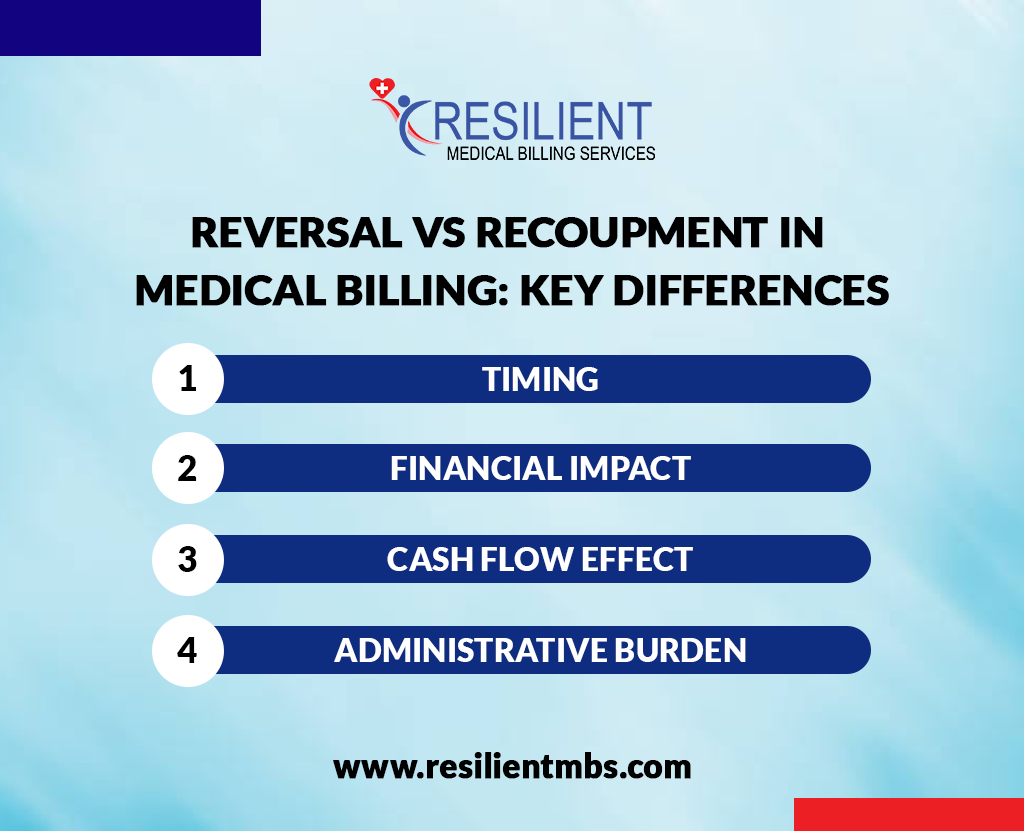
Administrative Burden
- Reversal: Usually automated and straightforward
- Recoupment: Requires tracking notices, appeals, and repayments
Understanding these differences allows providers to respond quickly and protect revenue.
How Reversal and Recoupment Affect Healthcare Providers
Impact on Revenue and Cash Flow
Reversals are typically manageable if corrected quickly. Recoupments, however, can cause unexpected revenue loss, especially when multiple claims are involved or large sums are withheld.
Increased Administrative Work
Both adjustments require staff time for:
- Account corrections
- Insurance follow-ups
- Appeal submissions
- Documentation review
Frequent adjustments also increase compliance risk if billing errors are not addressed systematically.
Best Practices to Reduce Reversals and Recoupments
Preventing payment adjustments is far more effective than reacting to them.
Maintain Accurate Documentation and Coding
Clear clinical documentation and correct coding reduce the risk of audits and payment disputes. Accurate records support medical necessity and compliance.
Verify Eligibility and Insurance Details
Confirm coverage, payer rules, and coordination of benefits before submitting claims.
Monitor Claims and Payment Reports
Regularly review EOBs, ERAs, and payment trends to identify issues early.
Stay Updated on Payer Policies
Insurance rules change frequently. Ongoing staff training ensures claims are submitted correctly and appeal rights are preserved.
Why Healthcare Providers Trust Resilient MBS for Billing Support
Managing reversal and recoupment in medical billing requires expertise, consistency, and proactive oversight. This is where Resilient MBS delivers real value.
How Resilient MBS Supports Your Practice
- Expert review of reversals and recoupment notices
- Accurate claim correction and resubmission
- Proactive audit prevention strategies
- Strong appeal management and payer communication
- Revenue-focused billing and compliance support
Our experienced billing specialists help providers reduce overpayments, protect cash flow, and stay compliant with payer regulations.
Partner with Resilient MBS to take control of your medical billing and minimize costly payment adjustments.
Final Thoughts
Understanding reversal and recoupment in medical billing is essential for protecting your practice’s revenue. While reversals correct early claim errors, recoupments recover funds long after payment, often impacting cash flow and operations.
By strengthening billing accuracy, monitoring claims closely, and partnering with a trusted billing expert like Resilient MBS, healthcare providers can reduce financial risk and maintain stable revenue.
Accurate billing isn’t just compliance. It’s protection for your practice.
FAQs
What is the difference between reversal and recoupment in medical billing?
A reversal cancels a claim shortly after payment, while recoupment occurs when an insurer recovers money after payment has already been made.
What does claim reversal mean in medical billing?
Claim reversal means the insurer voids a paid claim due to an error, removing both the claim and payment from their system.
What is recoupment in medical billing?
Recoupment is the process of recovering overpaid funds, often by withholding future payments or requesting repayment.
How many types of reversals in medical billing?
There are two types: full claim reversal and line-item (partial) reversal.
How can providers avoid reversals and recoupments?
Accurate coding, proper documentation, eligibility verification, and regular claim audits significantly reduce adjustment risks.