

Anemia is a health condition that happens when your body doesn’t have enough red blood cells or hemoglobin. Hemoglobin is the part of red blood cells that carries oxygen, so when levels are low, your body can’t get the oxygen it needs.
Anemia can cause tiredness, weakness, shortness of breath, and, in serious cases, problems with the heart and other important organs. Anemia can be caused by many things, such as not getting enough nutrients, long-term illnesses, inherited conditions, or sudden blood loss.
In healthcare, keeping clear and accurate records is very important for diagnosing and treating patients, as well as for smooth billing and insurance claims. For anemia, using the right ICD-10 (International Classification of Diseases, 10th Revision) codes helps doctors track the condition, ensures patients get the right care, and makes sure providers are paid correctly.
The purpose of this guide is to provide a clear understanding of the most commonly used ICD-10 codes for anemia, including both specific and unspecified categories. This helps healthcare providers, coders, and billing staff can document cases correctly and handle billing more smoothly.
Understanding ICD-10 Codes for Anemia
ICD-10 codes are special number-and-letter combinations used worldwide to record and share information about diseases and health conditions. For anemia, these codes tell doctors, hospitals, and insurance companies exactly what type of anemia a patient has and what caused it. This makes it easier for everyone to understand and work with the same diagnosis.
Codes for anemia usually start with the letter “D,” which stands for diseases of the blood. The numbers that follow give more details, for example, iron deficiency anemia is in the range D50–D53, while other types of anemia have their code ranges.
Using the correct ICD-10 code is important for both patient care and billing. It helps insurance companies process claims quickly and correctly, reducing the chance of delays or payment problems. If the wrong code is used, claims may be rejected, which can cause extra costs and stress for healthcare providers. Accurate coding keeps medical records clear and helps healthcare practices run smoothly.
ICD-10 Code for Anemia (General)
Anemia happens when your blood has fewer red blood cells than normal, or not enough hemoglobin. This means your body doesn’t get as much oxygen as it needs, which can cause tiredness, weakness, or other health problems.
In medical coding, doctors and coders use ICD-10 codes to record diagnoses. If the exact type or cause of anemia isn’t known, they use the general code D64.9 – Anemia, unspecified.
If tests or medical notes show the cause (like iron deficiency, chronic illness, or vitamin deficiency), a more specific code should be used instead. But if the details aren’t available yet, the unspecified code is the right choice.
ICD-10 Code for Anemia Unspecified
This code is used when a patient has anemia, but the records don’t explain what’s causing it. It still makes sure the condition is officially documented for medical care and insurance purposes.
Common situations for using D64.9:
- First visits, while waiting for blood test results.
- Hospital or emergency visits when the cause isn’t clear right away.
- Cases where anemia is confirmed, but the reason isn’t written down.
Tips to use the right code:
- Check lab results and doctor’s notes for clues about the type of anemia.
- Ask the doctor for more details if the information is missing or unclear.
- Use unspecified codes only when no further clinical detail is available at the time of coding.
- Accurate use of D64.9 not only ensures compliance with coding guidelines but also supports better patient care by encouraging thorough clinical documentation.
Need More Clarity When Coding Different Types of Anemia?
Using the right ICD-10 Codes for Anemia can make a real difference in documentation quality, claim accuracy, and reimbursement outcomes. If your team often deals with incomplete notes, unspecified diagnoses, or coding uncertainty, Resilient MBS can help streamline the process and support more confident billing decisions.
ICD-10 Code for Iron Deficiency Anemia
Iron deficiency anemia is one of the most common types of anemia around the world. It happens when your body doesn’t have enough iron to make healthy red blood cells. This can occur if you don’t get enough iron from food, your body has trouble absorbing it, or you lose blood over time.
Common reasons include bleeding in the digestive system, heavy menstrual periods, eating too little iron-rich food, or having certain long-term health conditions.
Key ICD-10 codes for iron Deficiency Anemia include:
- D50.0 – Iron deficiency anemia due to chronic blood loss: This code is used when anemia is caused by ongoing blood loss over a long period. Common causes include stomach ulcers, colon cancer, or heavy menstrual bleeding.
- D50.9 – Iron deficiency anemia, unspecified: This code is used when a patient has iron deficiency anemia, but the exact cause is not known or hasn’t been recorded in the medical notes.
ICD-10 Codes for Other Common Types of Anemia
- Megaloblastic Anemia (D53 series)
Megaloblastic anemia happens when the body doesn’t have enough vitamin B12 or folate. Without these nutrients, red blood cells grow too large and don’t work properly. Common causes include a poor diet or problems absorbing nutrients from food. Example code: D53.1 – Other megaloblastic anemias.
- Aplastic Anemia (D61 series)
Aplastic anemia occurs when the bone marrow cannot make enough red blood cells, white blood cells, and platelets. This can be present from birth or develop later, often due to certain medications or illnesses. Example code: D61.9 – Aplastic anemia, unspecified.
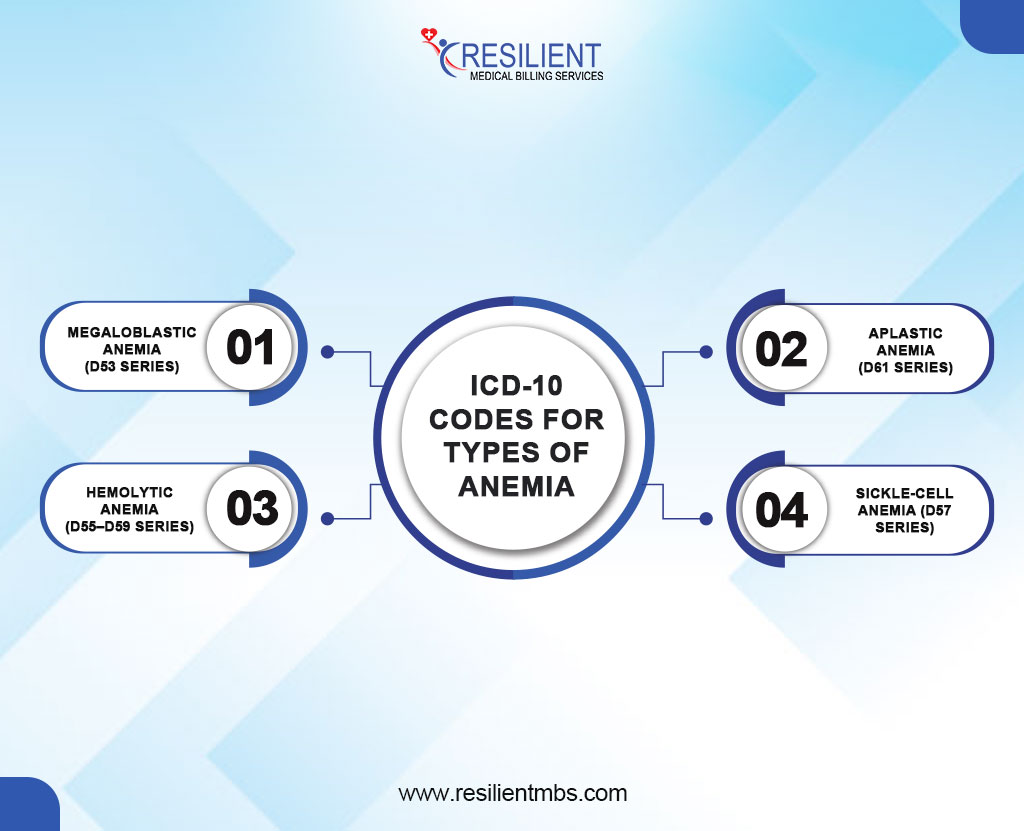
- Hemolytic Anemia (D55–D59 series)
Hemolytic anemia happens when red blood cells break down faster than the body can replace them. This may be caused by inherited conditions, immune system problems, or infections. It’s important to know whether it is inherited, acquired, or caused by medication. Example code: D58.9 – Acquired hemolytic anemia, unspecified.
- Sickle-Cell Anemia (D57 series)
Sickle-cell anemia is an inherited condition where red blood cells are shaped like a crescent or sickle instead of being round. These cells can block blood flow, causing pain and other health problems known as crises. Example code: D57.0 – Sickle-cell anemia with crisis.
Severe Anemia ICD-10 Codes
Severe anemia means a very low hemoglobin level, which can require urgent treatment like a blood transfusion. ICD-10 does not have a specific code for “severe anemia.” Instead, choose the code for the condition that is causing it.
How to Document Anemia for Accurate ICD-10 Coding
- What to Include in Your Notes
Hemoglobin levels: This helps show how severe the anemia is.
The cause: Write down the reason, such as iron deficiency, chronic illness, blood loss, or other causes.
Type and duration: Note if it’s acute (short-term), chronic (long-term), or a mix of both.
- Examples of ICD-10 Codes for Anemia
D50.0: Iron deficiency anemia caused by long-term blood loss
D57.0: Sickle-cell anemia with a crisis episode
D61.9: Aplastic anemia (cause not specified)
Common Mistakes to Avoid
Using “Unspecified” Codes Too Often
- Codes like D64.9: Anemia, unspecified, should only be used if you truly don’t know the type. Using them too much can make medical records less clear, affect research data, and slow down insurance claims.
- Be as specific as possible when coding.
Not Connecting Anemia to the Real Cause
- Anemia is often a result of another health problem, such as kidney disease, stomach bleeding, or poor nutrition.
- If you don’t show the connection, coding will be incomplete, and insurance payments may be lower.
Leaving Out Important Details
- Many anemia codes need exact lab results, severity, and the cause (for example, whether iron deficiency is from diet or blood loss).
- Without this information, coders have to use less specific codes, which can affect both patient care records and payments.
What is the ICD-10 Code for Anemia?
In ICD-10 coding, anemia is assigned different codes based on its cause and type. The general code D64.9 is used when the anemia type is not specified. Common examples include:
- D50.0 – Iron deficiency anemia due to chronic blood loss, often from ulcers or heavy menstrual bleeding.
- D50.9 – Iron deficiency anemia, unspecified cause.
- D53.1 – Megaloblastic anemia due to vitamin B12 deficiency.
- D63.8 – Anemia of chronic disease, linked to conditions like kidney disease or cancer.
- D57.1 – Sickle-cell anemia without crisis.
- D62 – Acute posthemorrhagic anemia caused by sudden, severe blood loss.
Wrap-Up!
Getting the ICD-10 code for anemia right is important for giving patients the best care and making sure insurance claims are processed smoothly. This means writing down all important medical details, clearly stating the type and cause of anemia, and avoiding vague or “unspecified” codes. Doing so helps doctors plan better treatments, keeps care consistent, and speeds up claim approvals.
Strengthen Anemia Coding and Billing Accuracy
Accurate anemia coding starts with clear documentation and the right level of specificity. When providers and billing teams work with cleaner records and better coding support, it becomes easier to reduce avoidable denials, improve compliance, and create a smoother reimbursement process. Resilient MBS helps healthcare organizations build that kind of consistency.
FAQS
What is the ICD-10 code for anemia?
The general code for anemia is D64.9 – Anemia, unspecified. It’s used when doctors don’t know the exact type or cause.
What is the ICD-10 code for iron deficiency anemia?
Common ones are D50.0 (from long-term blood loss) and D50.9 (iron deficiency anemia, unspecified).
When should I use the unspecified anemia code?
Use D64.9 only if there’s not enough medical information to pick a specific anemia code.
What is the ICD-10 code for severe anemia?
There isn’t one single code for “severe anemia.” Instead, you code for the cause (like iron deficiency or sickle cell) and note the severity in the medical record.
Why does accurate anemia coding matter?
It helps doctors plan the right treatment, makes billing correct, and prevents insurance claim problems.