

Credentialing is an essential process that enhances the capacity of physical therapists once they aspire to deliver quality and reliable services. Moreover, encouraging findings indicate that more than 90% of physical therapy firms claim that credentialing enhances patient confidence and reimbursement rates.
Why is licensing important? This is because some Physical therapists might need to follow the law, and getting their insurance companies to pay them back might be challenging.
From this blog, you will be able to understand physical therapy credentialing services such as insurance credentialing and Medicare reimbursement, among others.
Understanding Physical Therapy Credentialing Services
Physical therapy credentialing is the process of verifying that a therapist is licensed, qualified, and authorized to practice. This includes confirming education, state licensure, work history, liability coverage, and other professional records. In many cases, the process also involves background checks, reference verification, and review by insurance companies or credentialing bodies.
The purpose of credentialing is to confirm that the provider meets the standards required to deliver care safely and professionally. It also serves a practical business purpose. Without proper credentialing, therapists may struggle to join payer networks or receive reimbursement for covered services.
For that reason, physical therapy credentialing services are not just about paperwork. They support compliance, protect revenue, and help providers build a stronger foundation for long-term practice success.
Simplify the Credentialing Process
If managing applications, payer requirements, and follow-up is slowing down your practice, resilient mbs can help streamline physical therapy credentialing services so your team can stay focused on patient care and practice growth.
Insurance Credentialing for Physical Therapists
Physical therapists become insurance-authorized providers through certification. This requires an application verifying licensure, education, liability insurance, and employment history. These documents are reviewed by insurance companies to confirm therapist compliance.
Certification from insurance companies has many benefits. Since many people use their insurance for healthcare, it helps physical therapists grow their patient base. Credentialing also ensures timely and adequate service reimbursement, boosting a physical therapy practice’s finances.
Medicare Reimbursement for Physical Therapy
Medicare reimbursement is another essential concept under the scope of physical therapy care delivery for older adults. Before physical therapists can get paid by Medicare for the services that they have offered, they must consider some requirements and regulations that Medicare has put in place.
This concern entails satisfying Medicare requirements or certification for services to be provided and ensuring all services offered are reasonable and necessary services that will be fully documented.
Currently, in the Medicare payment system, the providers must complete some forms for services rendered to Medicare beneficiaries, which are then forwarded to Medicare for consideration.
Several findings highlight the importance of maintaining compliance with Medicare guidelines to reduce the chances of claims being denied and enhance timely payments.
There are measures that a physical therapist can take to ensure that claims are properly reimbursed; these include: Physical therapists should acquaint themselves with Medicare policies to avoid falling short of expectations as this can hinder reimbursement of services, services should be well documented, and all treatments given should be warranted.
Why are Physical Therapy Credentialing Services Important?
Credentialing is the process of the payer identifying the education, training, and experience of a provider in order to contract with them. Most insurance firms insist on an in-house plan before agreeing to cover a doctor’s services, hence the need to obtain in-network status.
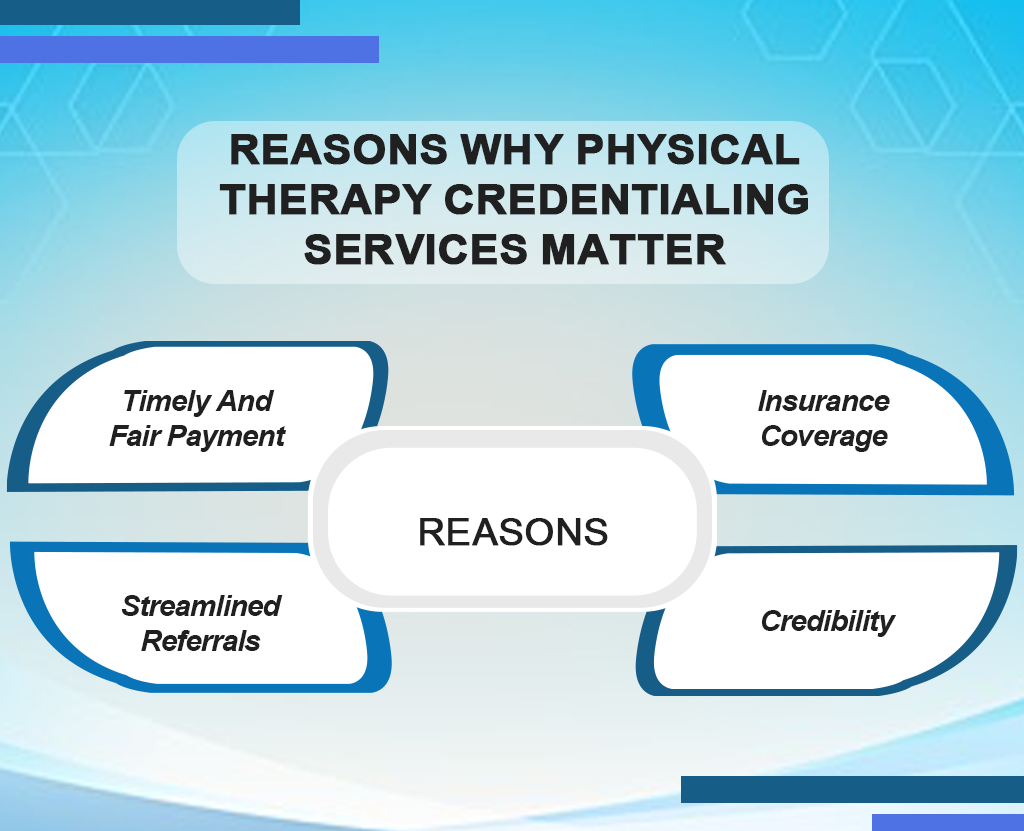
Here are some reasons why physical therapy credentialing services matter:
Insurance Coverage
Credentialing allows you to attend to patients with insurance. Thus, the number of potential clients and the possible income sources are also broader.
Credibility
In-network arrangements with insurers make one credible in the healthcare market and lead to increased healthcare provider recognition as constructive and reliable.
Timely and Fair Payment
Credentialing allows you to administer any requests between you and the insurance companies and negotiate fair fees for your services to be paid on time.
Streamlined Referrals
In-network status is advantageous because it lets you accept new referrals from physicians and other healthcare entities, growing your patient base and business.
Benefits of Physical Therapy Credentialing Services
Here are some benefits of credentialing being accorded to physical therapist and their patients:
In the case of physical therapists, credentialing benefits the professionals since it helps them create a professional image as a sign of their credibility and Compliance with the highest service delivery standards.
There can be many benefits associated with this recognition, such as enhanced job prospects, more patient referrals, and employer trust.
Thus, from the patient’s viewpoint, credentialing guarantees that individuals who will provide medical care are competent and qualified.
It also affects the insurance of this service since most insurance companies only compensate for services from accredited physiotherapist therapists. This expands the patient’s network and enhances patient confidence in knowing their physical therapist exhibits compliance with industry benchmarks.
Wrapping Up!
Physical therapy credentialing services are essential for therapists who want to build a compliant, credible, and financially stable practice. Credentialing supports payer participation, strengthens professional trust, and helps providers create better access for patients who depend on insurance-covered care.
When handled correctly, the credentialing process can support practice growth and reduce avoidable delays. When handled poorly, it can create unnecessary barriers to reimbursement and network participation.
Build a Stronger Foundation for Practice Growth
Resilient mbs supports providers with organized, dependable physical therapy credentialing services designed to reduce delays, improve payer readiness, and help practices move forward with greater confidence and clarity.
FAQs
They evaluate therapists’ qualifications to ensure they fulfill insurer and regulator criteria, allowing them to join insurance networks and offer treatments extensively.
They ensure clients receive qualified therapy, improving safety and outcomes. Certified therapists are more likely to be insured, boosting access to inexpensive, high-quality therapy and trust.
Paperwork, regulations, and delays are issues. Professional credentialing services minimize paperwork, assure compliance, and speed up the process for therapists.